我们常听到这种说法:每个人,都该做瑜伽!瑜伽,对每个人都好!的确如此,但是,说的人,却动机不同。当Guruji说的时候,他希望人们跟他一样,都能得到瑜伽的恩典;当普尚吉说的时候,他希望人们跟他一样,学到瑜伽的精髓肌理。而当我们说的时候,部分人,在做市场,部分人,在争名利,大部分人,去做了。但瑜伽只是在做吗?请听一段普尚吉语:
So this is the word(doing)that we attach to our endeavour in yoga. That is why we put a question to someone: Do you do yoga? I am doing yoga. Do you do yoga? Everyone should do yoga. It is good to do yoga for everyone. We believe that it is doing endeavour and there is that major flaw.
就是“做”这个词,将我们“附着到/依附到” 我们在瑜伽里的努力当中,那就是为何我们会这样去问别人:“你做瑜伽吗?我做瑜伽,你做瑜伽吗?每个人都该做瑜伽,做瑜伽对每个人有益”;我们于是坚信,那是“做出来”的努力,但那也铸成了一个大错。
瑜伽教育讲座(9) Education about Yoga
Namaskar,all of you. Welcome to the new session today.
大家好,欢迎来到今天的新课。
Couple of details about what we discussed so far: the major point is morality-ethicality and yamas-niyamas. So in order that you are much (more) clearer about it, let me add one more point here with regards to that.
有几点,是我们迄今为止讨论过的,主要是道德-伦理以及yamas-niyamas,为了让你们对此更加清晰,让我在这里再加一点。
In morality-ethicality, if you bring the principles of ahimsa, satya, asteya, bramacharya, aparigraha, we might claim from our own idea/notion of himsa and ahimsa that we are in the ahimsa. We don’t go after himsa, we don’t commit himsa, morally-ethically we are practicing ahimsa.
在道德-伦理中,如果你把“非暴力、诚实、不偷盗、节制、不囤积”这些准则考虑进来,我们或许会从我们自己对暴力和非暴力的认识和观点出发而发出声明,即我们既不追求暴力,我们也没有犯下暴力之罪,我们还从道德-伦理上,都遵循了非暴力准则。
Now in morality-ethicality, these five principles are completely different. They are not related to each other because you can be in ahimsa, but you will say I cannot be in bramacharya; I practice morally-ethically ahimsa, but I don’t practice satya, I don’t practice necessarily asteya or I can practice satya,I am in satya but not in ahimsa.
在道德-伦理中,这五项准则完全不同,它们彼此之间也没有什么关系,因为你可以在非暴力准则中,但你会说我无法同时在节制准则中;我在道德-伦理上遵循了非暴力准则,但我却没有遵循诚实准则,我还未必遵循了不偷盗准则,或者,我能遵循诚实准则,我处于诚实准则当中,却没有在非暴力准则当中。
“普尚吉语”发布
So these are different means morally-ethically to be in the ahimsa, to be in the satya, to be in the asteya, to be in bramacharya. These are different resolutions. We have to resolve to be in one of these principles or two of these principles and then we have different practices.
因此,这些都是从道德-伦理角度出发的不同路径,会让自己处于非暴力准则当中、处于诚实当中、处于不偷盗当中、处于节制当中,这些都是不同的解决之道;我们不得不在这些准则中的一、两项中,决定哪一个,然后再去遵循它们。
To be practicing ahimsa morally-ethically, it is one kind of practice; to be practicing satya, asteya, bramacharya, aparigraha morally-ethically, there are different practices. One and the same practice will not help you develop the condition to be in moral-ethical principles of ahimsa, satya, asteya, brahmacharya, aparigraha.
要从道德-伦理的角度去遵循非暴力准则,是一种方式;从道德-伦理的角度去遵循诚实、不偷盗、节制、不囤积的准则,则有不同的方式;一种以及同一种遵循方式,不会帮助你发展出非暴力、诚实、不偷盗、节制、不囤积这些道德-伦理准则中的条件。
Each one requires different kind of resolve, determination, taking recourse to means. What are the means to take recourse to ahimsa morally-ethically? What are the means to take recourse to satya morally-ethically? So these are different means, these are different processes. And for each of the five yamas to be practiced morally-ethically, we have to reform in five different ways for each of these. So that’s how it is the case of moral-ethical practices.
因为每一种都需要不同的决定、决心,要仰仗于各种手段/采取各种方法/遵循各种路径,从道德-伦理出发而仰仗于非暴力准则的方法,是什么?从道德-伦理出发而仰仗于诚实准则的方法/路径,又是什么?所以说,这些都是不同的方法/路径,这些都是不同的过程。对于要从道德-伦理出发去遵循的五个yamas中的每一种,我们必须为了五种中的每一种、以五种不同的方式进行改良,所以那就是它何以属于履行道德-伦理的修为。
But that is not the case of ethico-religious principle. If you are ethico-religiously in ahimsa, you won’t be violating satya, you won’t be violating asteya, you won’t be violating brahmacharya or aparigraha. If you are in any one of those principles, you will not be violating the other four which doesn’t happen in case of moral-ethical principles. You might be in one principle, violating the other principle. So when it comes to ethico-religious principle, understand this, it is an integral process. The resources for ahimsa, infrastructure for ahimsa, the practice for ahimsa, any endeavour for ahimsa will equipe one to go for other four as well.
然而,那不是伦理-宗教准则的情况,如果你从伦理-宗教出发而处于非暴力准则当中,你就不会违反诚实准则、你不会违反不偷盗准则,不会违反节制或不囤积准则;如果你处于那些准则的任何一项当中,你不会违反其他四项,那却不会发生在道德-伦理的情况下,即你可能处于一项准则当中,而同时违反了另外一项准则。因此,在说到伦理-宗教性准则时,要去理解这些(不同),那是密不可分的整体路径,非暴力的资源、非暴力的基建、遵循非暴力准则、为了非暴力准则付出的任何努力,都会武装好一个人,以便去遵循另外那四项准则。
“普尚吉语”发布
We don’t have to have separate practices ethico-eligiously for ahimsa, then another for satya, yet another for asteya, and yet another for bramacharya and yet another for aparigraha. One and the same practice, it is one and the same material of the consciousness and psyche which will have five dimensions.
我们不必分开去履行它们,即从伦理-宗教的角度出发,先遵循非暴力准则,然后去履行另外一项——诚实,然后到另一项——不偷盗,还有节制和不囤积准则;一项准则的履行以及每一项准则的履行,其实都是拥有五个维度的同一种意识“材质”。
So as far as ethico-religious principles are concerned, you cannot say I am in ahimsa but not in satya; I am in ahimsa but not in asteya; I am in ahimsa but not in brahmacharya; I am in ahimsa but not in aparigraha which can happen in moral-ethical schemes——you can be in one, violating others. If you violate one, it doesn’t mean that you are violating all the other four. But in case of ethico-religious principles that is not the case.
因此,但凡涉及到伦理-宗教准则,你就无法说:“我在非暴力当中,但不在诚实当中;我在非暴力当中,却不在不偷盗当中;我在非暴力当中,却不在节制当中;我在非暴力当中,却不在不囤积当中”,这些情况只会发生在道德-伦理的体系里,即你可以处于其中之一,却在违反其他几项。如果你违反了一项,那并非意味着你违反了所有其他四项,但在伦理-宗教准则的情况下,却并非如此。
The sadhana for all the five yamas and even niyamas, and even later asana, pranayama, pratyahara, dharana, dhayana, samadhi is nothing but build-up sattva, build-up sattva-guna, build-up the essence. So that is why it is called sat-sanga. Sat-sanga is sattva sanga, sat-sang is santasanga, sat-sang is satyasanga.
五个yamas的所有准则,甚至包括niyamas(的五个准则),乃至之后的体式,调息,收摄、专注、冥想、三摩地,所有这些“修行”,全都在打造“悦性”、打造“悦性的原质”、打造“意识到精髓”。因此,那就是为何它被称为“与真知相随/相融”,因为这个也是“与悦性相随/相融”,“与圣人相随/相融”、“与诚实相随/相融”。
So sat-sanga, the concept has to be understood first as it comes in adhyatma and so also sadhana-sanga. Whatever is the sadhana for one yama, it is good enough for other four yamas. You don’t have to have separate practices. That is sat-sanga, sadhana-sanga, shastra-sanga, sattvic ahara-vihaar-achar-vichar. The practices are one and the same.
因此,“与真知相随/相融”这一概念,必须首先得到理解,因为它进到了灵性真我当中,还有“与修行相随/相融”;不论是为了哪一项yama的修行,那都会对其他四项yamas足够好,你不必分开去履行它们,那就会成就出“与真知相随/相融”、“与修行相随/相融”、“与圣典相随/相融”、“悦性的摄入、言行举止、思想、移动”,遵循着一个,遵循着同一个。
“普尚吉语”发布
And even for quintessential asanas, it is the same practice, same material. If that material is there, you will be able to practice asanas quintessentially; pranayama similarly; pratyahara, dharana, dhyana, samadhi similarly. So that is why there is a broader scheme of sat-sanga, sadhana-sanga, shastra- sanga and sattvic ahar-vihar-achar-vichar.
甚至对于真正核心意义的体式而言,那也是同一种遵循方式、同一种材质;如果那个材质出现在体式里,你就能够从核心意义上去习练体式,调息也是如此,收摄、专注,三摩地也是如此。那就是为何“与真知相随/相融、“与修行相随/相融”、“与圣典相随/相融”、“悦性的摄入、言行举止、思想、移动”,是一个更广的体系。
So we must develop our understanding with regards to these. What are really these, what are the nuances, what are the implications. The point is in morality-ethicality you can practice one and in practicing one you can be violating other four or any of the other four, while in ethico-religious principles, you can’t be doing that. If one is violated, all are violated; if one is practiced ethico-religiously, others too are practiced because yoga is all integral process.
我们因此一定要开发出我们对这些的理解,这些到底是什么、细微之处是什么、都蕴含着什么?重点是,在道德-伦理中,你可以履行一项,但在履行这一项的同时,你可能在违法其他四项或四项中的任何一项;而在伦理-宗教的准则中,你不可能那样做,如果违反了一项,等于所有的都违反了;如果一项从伦理-宗教的角度得到了遵循,其他的也得到了遵循,因为瑜伽是一个密不可分的整体过程。
So that is another difference between the two. So thisis the clarification I wanted to give. Now we are proceeding to our session today, formally we embark upon it. What are we going to discuss today for our education? Like yesterday, I would suggest that you get into the same positions which you tried yesterday, either shirshasana or bharadvajasana or utthita hasta padasana. Now yesterday we saw the preparatories and we did it from the spinal-paradigm, back-paradigm. Today also we will stick to back-paradigm and spinal-paradigm, however let me tell you, what you did yesterday from spinal-port-hole, back-port-hole, if you do it from the brain-port-hole, you will have different constitution of other processes.
那就是这二者之间的另一个区别,这也是我想给出的说明。现在,我们要进入我们今天的课程,要正式开始了,今天,为了我们的教育,要探讨什么?就像昨天那样,我建议你们进入昨天尝试过的同一个姿势,要么是头倒立、要么是巴拉德瓦伽、或者是手到脚。昨天我们看到了,我们做的那些准备,是从“脊柱-模式”、“背部模式”出发;今天,我们依然坚持“背部-模式”和“脊柱-模式”,但让我告诉你们,你们昨天是从脊柱这个聚焦点、背部这个聚焦点出发的,如果你们现在从大脑这个聚焦点出发,你们就会有其他过程的不同组合。
Whatever yesterday we tried, we tried to experiment, understand, comprehend. That was done from spinal-paradigm, spinal-centricity; now you can try the same from head-brain- face-skull connectivity, relativity, associated conditions, kneaded conditions——body-set, breath-set, mind-set addressals. So roughly this was the skeleton of yesterday’s session. That was done from spine and back. Today I am suggesting you can do from brain. It will be different negotiation, different scheme, different process.
不论昨天我们尝试过什么——我们无非尝试了实验、理解、领悟那些过程,都是从“脊柱-模式”、“脊柱中心”出发,你们现在可以尝试从头部-大脑-面部-颅骨的联结性、相关性、联合化情况、糅和性情况出发,依然是身体层面、呼吸层面、头脑层面的调节方式。因此大体上,这就是昨天课程的框架,那是从脊柱和背部去搭建;今天,我建议你们从大脑去搭建,那是不同的做法、不同的规划、不同的过程。
“普尚吉语”发布
However today we are again going back to spine and back, but we are trying to explore the thought matter because unless we have thought matter, suitable thought matter, compatible thought matter, meditative-worthy thought matter, we will not be able to get to meditativity. So let us see how it can be done, how we can collect sumptuously the thought material which can escalate into the processes of pensivity, reflectivity, meditativity.
今天,我们还是回到脊柱和背部,但我们要尝试去探索思想物质,因为除非我们拥有了思想物质、合适的思想物质、相应的思想物质、值得冥想的思想物质,我们就无法获得冥想性。因此,让我们看看那如何才能实现,我们如何才能大量地收集到这些可以促进我们进入沉思、反思、冥思的思想原料。
So get to your position, get to your posture, one of the three postures. You may change the sides on your own, you may change the postures also between these three, you can be also changing, there are three options, that is up to you.
进入你们的摆放、进入你们的姿势,三个姿势中的任何一个,你们可以根据你们自己的情况换边,也可以在这三个姿势之间交替进行,有三个选项,你们自己去决定。
Now usually our indoctrination which we have got it ourselves, it is not that we have been indoctrinated like that, but we have got indoctrinated like that. Listen to this statement carefully——it is not that we were all indoctrinated like that but most of us have got indoctrinated like that because of subjective element of psyche, consciousness, comprehensions, dispositions, mind stuff. Then when we get into the pose, what usually we consider is, what we examine is: how have I done? What have I done? What is yet to be done? What is most needs to be done?
我们自己养成的教条,其实并非是我们被灌输了教条,而是我们按照教条的方式“被”教条了。仔细听这个说法——并不是我们全都像那样被灌输了教条(思想),而是我们大部分人,自己养成了教条习惯,这源于心灵、意识、悟性、偏好、头脑物质的个体主观因素;然后,当我们进入了姿势,我们通常关注、检查的就是:我如何做?我做了什么?还要做什么?最需要做什么?
So we just consider, we think asanas are doing and therefore our habit is and the instructions also are pertaining to our activities——what should we do, what are we supposed to do, what is it that we have done, what is it that has to be done, what is not yet done, what needs to be done, because we think yoga is all doing and doing and doing;because we have a strange idea and notion that yoga is activity process, yoga is action, yoga is activity, yoga has to be done.
所以,我们只是去关注、只去认为“体式就是做”,因此我们的习惯也是做,指令也只涉及到我们的行为——我们该做什么、我们本该做什么、我们已经做的那个是什么、必须做出来的是什么、什么还没做、需要去做什么,因为我们认为瑜伽全都是做、做、做,因为我们有一个奇怪的理念和观念——瑜伽是行为过程、瑜伽是动作、瑜伽是行为、瑜伽是被做出来的。
“普尚吉语”发布
So this is the word that we attach to our endeavour in yoga. That is why we put a question to someone: do you do yoga? I am doing yoga. Do you do yoga? Everyone should do yoga. It is good to do yoga for everyone. We believe that it is doing endeavour and there is that major flaw.
“做”这个词,把我们“附着到/依附到”我们在瑜伽里的努力当中,那就是为何我们会这样去问别人:你做瑜伽吗?我做瑜伽,你做瑜伽吗?每个人都该做瑜伽,做瑜伽对每个人有益,我们坚信那是“做”的一种努力,那就铸成了一个主要错误。
Sooner or later, we have to understand that it is not just have a checklist and go on checking: what have I done? What I should be doing? What may be done? What can be done? What is yet to be done?
或早或迟,我们一定要领悟到,(瑜伽)不只是一份检验清单,一直查下去——我做了什么?我该做什么?什么可能被做?什么能被做?什么还没做?
Rather than going for doing and checking what we are doing, since we are prepared in the realm of sensitivity-awareness- activity, we should now put a question, now when you are doing your position or in your posture: What am I sensing? What am I feeling? What am I knowing? So rather than putting that question every time: have I done, have I done, have I done and what have I done, why not put this question: what am I knowing?
与其追求“做”、与其检查我们做了什么,加上既然我们在感知力-觉知力-行动力这个领域做好了准备,还不如在你目前这个摆放或姿势里这样去问:我感受了什么?我感觉了什么?我认知了什么?所以与其每次都那样去问,即反反复复地问:我做了吗?我做了吗?我做了什么?不如这样去问:我认知了什么?
Because we are working with sensitivity, we are working with awareness, so this question should now gain prominence in our dynamics: what am I sensing, feeling, experiencing and what am I knowing? Now from the spinal-paradigm as you are doing, try to understand: what am I knowing by the interaction of my spine with the rest of the trunk, interaction of my back with the rest of the body?
因为我们是带着感知力在努力,我们是带着觉知力在努力,所以这个问题现在应该在我们的动态获得突出地位,即我在感受什么、在感觉什么、在体验什么?我在认知什么?现在,当你是从“脊柱模式”去做的时候,尝试去理解:通过我的脊柱与躯干的其他部分的相互作用、通过我的背与身体的其他部分的相互作用,我在认知什么?
“普尚吉语”发布
Try to know rather than just trying to do it by technical process of accomplishment. Put a question: what am I knowing about the interaction of my spine and back with the rest of the body, interaction of my breath and the spine, my mind awareness and the spine, the breath and mind, their interactions; the body, mind, breath, their mutual interactions. Let’s try to understand what are we knowing here.
尝试去“认知”,而不是仅仅尝试通过成就体式的技巧性过程去“做”,要提出问题——对于我的脊柱和背部与身体其他部分的相互作用、我的呼吸和脊柱的相互作用、我的头脑觉知和脊柱的相互作用、呼吸和头脑的相互作用、它们之间的相互作用——身体、头脑、呼吸之间的相互作用,我认知到了什么?让我们尝试去理解,我们在此认知到了什么。
So knowledge process is so important. So we must develop this habit of putting a question ofwhat am I knowing which is based on sensitivities, awareness, perceptions. So we will be getting hold of knowledge material matter in our process. What am I knowing? Now in what am I knowing there are three things: something is known, something is knowing and there is a knower. Therefore we will collect some data-base, information-base with regards to knowledge with respect to the done-entity, the doing instrumental-entity and the doer subjective-entity.
因此,认知过程是极其重要的,我们一定要去开发出这种自问自答的习惯:基于感知力、觉知力、感知力,我认知了什么?我们因此而抓住了这个过程中的认知材料、认知物质——我在认知什么?现在,“我在认知什么”这当中,存在着三样东西——某些东西被认知了、某些东西在认知,还有一个认知者。因此,我们要去收集一些信息,那是基于对行为客体的认知、对行为载体的认知、对行为主体的认知。
What do I know about my own state, my mental state, my psychological-mental state, my emotional state? What do I know about it, about my own state? Like somebody can see your posture and your teacher can tell you where you are wrong and where you are right and how much you are wrong and how much you are right.
我对我自己的状态、我的精神状态、我的心理-精神状态、我的情感状态,认知到了什么?我对那些、对我自己的状态,认知到了什么?就好像有人刻意看到你的姿势,你的老师可以由此告诉你:你哪里错了、你哪里对了,你错了多少、你对了多少。
But then, when it comes to your own subjective state, it is only you can do it——how is your subjectivistic state? Am I clear? Do I have clarity? Am I quiet? Am I relaxed? Am I in the knowledge process? So the point is we must develop this habit of putting a question: what am I knowing?
但是,当来到你自己的个体主观状态时,只有你才能回答那些问题了,即你的个体主观状态如何?我清楚了吗?我有清晰度吗?我是安静的吗?我是放松的吗?我处于认知过程吗?所以重点是,我们必须开发出这种提问习惯——我在认知什么?
“普尚吉语”发布
Now go about the scheme that we saw yesterday and negotiated yesterday. Now this is associated body-mind-breath conditions, so address the associated body——what do I know? When I am trying to address my body-matter, body organs, body parts—— what do I know? Then comes the breath-considerate condition and breath-set addressal; then again it will be changing, the matter will be changing as to what we know with regards to breath, breath-matter, breath-set.
现在,去运用我们昨天的方案、昨天的做法,到了此时,这就是身体-头脑-呼吸状态联合起来的情况;因此,去调节联合起来的身体,要去问:我认知了什么?当我尝试针对我的身体物质、身体器官、身体部位进行调节时,我认知了什么?然后,来到以呼吸为主的情况、针对呼吸层面进行的调节,那又会发生变化,取决于我们对呼吸、呼吸物质、呼吸层面的认知,所有物质都会变。
Similarly about the mind-set, mind-considerate condition, mind-set addressal——what do I know about my mind? So there is a knower,knowing entity. So let’s try to collect some material matter, information, data-base for the knowing entity, which is knowing. Then the knowing entity on the anvil. How is the knowing——perception, sensation, cognition, memory?
同理,关于头脑层面、以头脑为主的情况、针对头脑层面进行的调节,我对我的头脑认知了什么。因此,存在着认知主体、认知载体。因此让我们尝试为了认知载体去收集一些材料性的物质、信息、数据;然后,认知载体会被放在案板上,去看看认知载体/过程如何——感知、感受、认知、记忆(过程)如何?
So this will give room for thought process, it will be unique thought process; then about the known. So there’ll be again tri-partite constitution of knower, knowing, known/their interplay, their interactions.
因此,这会给思想过程带来空间,那就会是独特的思想过程;然后,关于认知客体,也存在三体的构成,即认知主体、认知载体、认知客体,还有它们之间的相互作用。
So what is the thought substance, thought matter when you are trying to objectively look at the known entity? Knowledge about the known, the thought about the known, the thinking about the known and how is the thinker when the known is being knownor the thinking is being known? How is the knower? What is the role of the knower? What is the profile of the knower?
因此,当你尝试客观看待认知客体时,就会发现什么是思想物质、思想事物,对认知客体的认知、关于认知客体的思想、关于认知客体的思考,认知客体在被认知时,思想主体如何?认知主体如何?或者说思考过程在被认知时,认知主体如何?认知主体的角色是什么?认知主体的面貌是什么?
“普尚吉语”发布
So getting the known on the anvil, let us see the thought process with regards to knowledge experience that comes in. We certainly experience something while we are doing an asana but we do not give importance to that. We don’t look at it as a thought locus, thought resource.
因此,要把认知客体放在案板上,让我们去看看进来的认知体验都有什么样的思想过程。当我们做体式的同时,我们确实感受到了某些东西,但我们并没有对那个东西予以重视,我们没有把它当作思想焦点、思想来源去看待它。
So let’s try to understand what is the thought when we are objectifying the known——what is it that is known? Object of knowledge,what is the object of knowledge? Then alternately we will have to get unto anvil of the knowing, the instrumentalities. So that will be a different knowledge-base because the knowledge which is with regards to knowing. Then the subjective entity, the knower itself. So in mysticism of yoga and adhyatma, there comes a condition or there comes a proposition: Know the knower! Now we are not familiar with this.
因此,让我们尝试去理解,当我们客体化认知客体时,思想是什么——被认知的,是什么?认知对象,认知对象是什么?然后,我们做一下调换,即我们必须把认知过程也放到案板上,即认知载体,那会是不同的认知基础,因为涉及到了认知过程;然后,换到认知主体,主体本身。所以,在瑜伽以及灵性的秘境中,会来到这样一种情况或推断——认知“认知主体”!我们目前还不熟悉这个。
Knower knows! But we do not try go for a process where the knower itself is known, so knower will become object of knowledge; knowing will become object of knowledge, known will become object of knowledge and these three will churn out different thought material and the thought process will evolve. So as I said during that delineation on meditation that thinker, thinking, thought, you will identify here a thinker. When there is a knowledge process, you think.
“认知主体”可以认知!但我们并没有尝试进入“认知主体”本身被认知的过程,即认知客体变成了认知对象,认知过程变成了认知对象,认知客体变成了认知对象,这三体会“搅拌”出不一样的思想材料,思想过程也会提升。正如我在关于冥想的描述时说的——思考者、思考过程、思想,你会找到此处的思考者,当有了认知过程时,你就会去思考。
Again, let me tell you now, here as I am talking to you, you are not just listeners; you just can’t be listening to this. You will be having a thought process from what I am saying, so you are also thinkers now, identify this. This goes unidentified. You think you are listeners, but it is such a matter that I am talking about that you will invariably be in a thinking process. You are also a thinker, as I am the thinker as to what should I be saying now, what should I speak now, what should I say now.
让我在这里再一次告诉你们,我在这里,正在对你们讲话,但你们不仅是听众,你们做不到只听我讲话,你们还从我所讲的东西里产生了思想过程,因此你们此时也是思考者,去认识到这一点,这没有被认识到,你们认为你们只是听众,但其实是这么回事——我在讲述,你们就不可避免地会处于思考过程,你还是思考者,就像对于我此时该讲的东西而言、我此时该说什么而言,即让我成为了思考者那样。
“普尚吉语”发布
So I am thinking for every statement that is coming out of me, I am thinking what should I say, how should I say. SoI am thinking while I am speaking. I cannot be not thinking while I am speaking; similarly you are getting such a matter that you are thinking invariably while you are listening, while you are hearing, while you’re following, while you are comprehending, while you are understanding.
所以,我在思考每一个从我这里出去的说法,我在思考我该说什么,我该如何说,我在说话的同时,我还在思考;在我说话的同时,我不能不想。同样的,你在获得这样一件事物——你在听的同时也在想、在领会、在理解。
So your thinker is active, thinking is active. So there is a thought, there is a thinker, there is thinking even in you now. Now find out in yourposition that you are doing, bharadvajasana, shirshasana or utthita hasta, from the spinal perspective, watch the thought process——how it changes between body-set addressal, breath-set addressal, mind-set addressal? How the thought matter changes?Thought content changes, thinking process changes, thinker’s profile will change. So start developing literacy for this. This is an important component of yogasana——knowledge process.
你的认知主体是活跃的,思考是活跃的,所以才会存在思想,才会存在思考者,甚至在你的里面,此时还存在思考过程。现去要去探寻,在你做出的这个摆放中,即巴拉德瓦伽或头倒立或手到脚,从脊柱的视角,去观察思想过程——它如何在身体层面的调节、呼吸层面的调节、头脑层面的调节之间带来改变,思想物质如何改变?思想内容既然变了、思考过程既然变了,思考者的面貌也会变。因此,开始去开发出对这个的解读能力,这是瑜伽体式的一个重要组成部分,即“认知过程”。
Then as I said yesterday there is also the proposition of‘you doing’ that your activity of the body, activity of the breath, activity of the mind——doing. Then you are also trying to stay. That is an implication of asana that you must stay in asana while usually you are taught to do an asana, you are never taught to stay in asanas and we think the technique to do is the technique to stay.
然后,正像我昨天说的,在“你做”的这套说法中,也包含着你的身体行为、呼吸行为、头脑行为。然后,你也在尝试“待着”,你还必须“待”在体式中,那是体式所蕴含的东西,即你一定要待在体式里,但你们却往往被教导去“做”体式,你从未被教过如何“待”在体式里,我们总以为“做”的技巧就是“待”的技巧。
That is not proper, that is not sound, logic. The technique to stay has to be different than technique to do. So you will be in the phase of doing, you will be in the phase of staying, you will be in the phase of maintaining, you will be in the phase of penetrating, you will be also considering the intensity of your activity, because you want to be doing your asana intensively, penetration, intensity; then you will be going for getting settled condition.
那是不对的,那不符合理性和逻辑,“待”的技巧一定会区别于“做”的技巧;你会处于“做”的阶段,你会处于“待”的阶段,你会处于“维持住”的阶段、你会处于“穿透”的阶段,你还会处于考虑你行为“强度”的阶段,因为你希望很强地、具有穿透力和强度地去做你的体式,然后你想要获得“安定下来”的状态(译者注:形同“安住在自己家里”的状态)。
“普尚吉语”发布
So you’ll be going through all these various phases which come in the one channel of asanic rendition which is doing, staying, maintaining, efficacy, intensity, access, freedom, getting settled. Everywhere the thought content will change for every phase of it. Highlight every phase.
你会经历所有这些不同的阶段,那都会进入体式的轨道之一,即“做”、“待着”、“维持住”、“功效”、“强度”、“通达”、“自由”、“安住”;思想内容在这些阶段的任何一个地方都会变,要去强调每个阶段。
Your thought content will change, thought process will change, thinker profile will change. Then on the other channel, what do we do? While you’re doing, you are learning,are you merely doing your bharadvajasana, merely doing your shirshasana, merely doing your utthita hasta? You are learning because of knowledge process here; you are studying, there is something to study. So you will be going through the phases of doing, learning, studying, understanding, comprehending and various processes are required, such as perception, cognition, analysis; and then you will be going for a settled condition by knowledge process.
你的思想内容会变、思想过程会变、思想者那一面也会变;然后在另一个轨道上,我们做什么?当你在“做”的时候、当你在“学”的时候,你只是在“做”你的巴拉德瓦伽吗?只是在“做”你的头倒立吗?只是在“做”你的手到脚趾吗?你在“学”,那正是由于此处的这个认知过程;你还在“研究”,有某些东西要去研究。因此你会经历这样的阶段——“做”、“学”、“研究”、“理解”、“领悟”及其它们的过程,比如感知、认知、分析等等;之后,你会通过认知过程而进入“安住”状态。
So in the more processes, the knowledge matter will change. Try to explore this while you practice on your own or some sessions, try to understand how the knowledge matter will change in all the phases—— doing, staying, maintaining, intensity, efficacy, freedom, getting settled;on the other hand —— doing, learning, studying, understanding which implies experimentation, which implies observation, analysis, perceptions, thought process.
在更多过程中,认知事物都会变;当你在你自己的习练上或在一些课程上,尝试去探索这些,尝试去理解认知事物如何在所有那些阶段上发生着改变,这些过程是:做、待着、维持住、强度、功效、自由、安住;另一个过程是:做、学、研究、理解,即蕴含着实验、观察、分析、感知、思想过程。
Then going for a settled condition. Everywhere the thought matter will change. Mark that. Explore that in sessions that we will be practicing for this particular lesson. So you will certainly find that again there is enormous material for the triad which we considered in meditation——thinker, thinking and thought.
然后,还要有“安住”状态,在任何地方,思想事物都会变,要认清那个变化,要像我们这堂特别的课程那样,去探索其他课程里的那些变化,你一定会再度发现,我们在冥想里所关注的“三体” 即思想者、思考、思想,存在着大量原材料。
“普尚吉语”发布
And it will be more pronounced when you have this proposition, the knowledge process——what do I know? How do I know? Who is the knower? Who is the knowing entity, instrumental entity which is like your awareness, your mind, your intellectual process, your emotional process, your mental process, your memory process, your cognition process, your perceptive process; these are all instrumental entities which are constituting the knowing, the thinking.
当你有了这样的推论,即认知过程,一切都会更明显——我认知了什么?我如何认知?谁是认知主体?谁是认知过程/载体,那些都会像你的觉知、你的头脑、你的智性过程、你的情感过程,你的精神过程、你的记忆过程、你的感知过程、你的觉察过程;这些全都是载体,正是它们在构建认知过程、思考过程。
And then there is the thought itself. The thought matter also will be changing for every phase that you negotiate in a classical asana. Asana is not just doing. Now this is our faulty indoctrination. We have got faultily indoctrinated by our own subjective influences, not that our teachers have given that indoctrination. It is our dabbling, our interference whereby we get indoctrinated by ourselves.
然后还有思想本身,思想事物也会在每个阶段发生改变,那就是你在传统体式里的“全盘考虑”,体式不仅仅是在“做”;今时今日,这是我们错误的灌输,我们通过我们自己的主观上的影响,从而获得了这个错误的灌输,那不是我们的老师给的教育,是我们的浅薄、我们的干预,让我们在那里面经由我们自己获得了那种灌输。
That’s why we think it is just all doing and doing and doing. We don’t understand the various phases of asanas which I have been repeatedly telling you. So, you will see that there is a lot of material for meditation, meditativity particularly when you are in knowledge process, rather than in a doing process.
那就是为何我们认为体式仅仅是做、做、做,我们没有理解体式的各个阶段,那是我一再告诉你们的东西。因此,你们会明白,为了冥想、冥想性,要有大量的(思想)原材料,尤其当你处于认知过程时,才会有,而非在“做”的过程中。
Yesterday we were in doing process where I suggested knowing-knowledge process, this will churn out a lot of material for meditativity where there is thought about thinker, thought about thinking, thought about the thought; there is thought of the thought, there is thought of thinking, about the thinking, there is thought about the thinker. That is how there are meditativity-potentials in asanas because of this process. So with that, I want to end the precept here today. However, I will go for one question which has come to me.
昨天,我们就在“做”的过程中,我在那里提出了去认知“认知过程”,这会产生出大量的冥想性原材料,那里即存在着关于思考者的思想、关于思考的思想、关于思想的思想;存在着思想的思想,存在着思考的思想、关于思考者的思想,那就是体式中何以具有冥想性潜质的方式,那正是因为有了这个过程。讲到它,我想就在这里结束今天的概念阐述,但我会回答一个给到我的问题。
“普尚吉语”发布
Somebody has this question: what do the asanas do beyond something physical and something spiritual? Because then we know that asanas do something for physical and then some of you/some of us have the idea that asana do something for spiritual as well.
某人有这样一个问题:“体式做了什么,去超越身体之外的那个东西以及精神/灵性的某些东西?”我们都知道,体式的确为身体做了些什么, 然后你们/我们中的有些人,于是就有了这样的观念:体式也一定会为精神/灵性做些什么。
This question is apart from the two, what do the asanas do? That means the person deems that/that the person knows as to what asanas give benefits to physical, how physical is beneficiary. The person also seems to be deeming, assuming, presuming thatthe person knows that it does something for spiritual. That spirituality is also a beneficiary. But the person wants to identify if there is any other benefit apart from physical benefit and spiritual benefit.
这个问题是从那两个问题来的,即“体式做了什么?”,那意味着这个人认为、也清楚体式会给身体带来什么好处,身体如何成为了受益者;这个人也似乎认为、假设、以为他/她清楚,体式也的确为精神/灵性层面做了什么,那个精神/灵性层面也是受益者。但这个人想认识到的是,除了身体方面和精神/灵性方面的好处之外,体式是否还有任何其他好处。
The first thing here, I do not know what the person means by ‘spirituality’. While the person assumes that there are benefits to spirituality in a person, there are spiritual benefits through asanas, I want the person to put a question for herself or himself: What do I consider by spiritual? Because now it has become fashionable to be using that yoga is physical, mental, spiritual so that it can be put into a bracket that it is holistic.
在这里的首要事情是,我不知道这个人所指的“精神”/“灵性”是什么。当这个人假设,体式里存在对人的精神/灵性的好处,存在经由体式而获得的精神/灵性好处,那么我希望这个人向她/他自己提出一个问题:你自己所说的精神/灵性,是什么?因为现在,“瑜伽是身体的、精神的、灵性的”这类说法变得很时髦,它都能被归到“神圣的”的那一类里。
But there is a flaw in the very word ‘spiritual’. I suggest the person to go back to dictionary and try to understand what is ‘spiritual’. There are two meanings to it. One is to do something with the spirit, that is also ‘spiritual’; and then something to do with what you call as ‘soul’, the ‘soul’ and ‘spirit’, both are, if I may say so, biblical concepts.
但是,恰恰就在“精神/灵性”这个词汇里,本身就存在谬误,我建议这个人回去查一下字典,尝试去理解什么是“精神/灵性”,它该有两层意思,一个意思是很有劲头地去做某件事,那也可以叫做“精神”;然后,另一个层意思,就与他们称之为“灵魂”的东西有关了,灵魂和灵性,如果允许我这样说,就是圣经的概念。
“普尚吉语”发布
Yoga is not going for any spiritual. There is nothing like spiritual evolutions, spiritual evolvement, spiritual benefits, spiritual conditioning because what we consider is the ‘Self’.
瑜伽不追求任何“灵性”,不存在任何像灵性演化、灵性升华、灵性好处、灵性调节这类东西,因为我们所关注的是“真我”。
The ‘Self’ metaphysically doesn’t look for any benefit. The Self doesn’t have any benefit, doesn’t seek for any benefit, no benefit can be given by it, to it; no benefit, it will give. Metaphysically that’s the entity called Self is neither the taker nor the giver, nor the beneficiary nor the benefactor. So the word more precise/proper word would be ‘Adhyamta’.
“真我”,在形而上的意义上,不寻找任何“好处”,“真我”也没有任何“好处”,不去追逐任何“好处”,任何“好处”也不会通过它被赋予、给到它;它也不会带来任何好处。从形而上的角度说,那是被称为“真我”的一个存在体,它既非索取者,亦非给予者;既非受益者,亦非施惠者,因此这个词更精准/更合适的是ADHYATMA,即梵文的“灵性真我”。
Now if the person thinks that yoga gives a spiritual benefit, if the person thinks that it is spiritual summum bonum, if spiritual benefit means spiritual summum bonum——ultimate good, ultimate target, ultimate attainable, that is called human spiritual summum bonum, if that is what is the notion in the mind of the questioner. And there are so many things between physical material to so-called spiritual.
现在,如果这个人认为瑜伽给了灵性好处,如果这个人认为好处是灵性的“至善至喜”,如果灵性的好处意味着灵性的这个最高境界——终级之好、终极目标、终极实现,即被称为人类灵性的至善至喜,如果那就是这个提问者心里所认识到的,那么还有太多东西,存在于身体物质到所谓的精神/灵性层面之间。
Yoga gives benefit at every stage. Yoga has a lot to offer to you and me even if you are very mundane people, worldly people, materialistic people, perhaps even profane, there is a lot for yoga to offer to us.
瑜伽,在每个阶段都会赋予出好处,瑜伽有太多可以给到你和我,即使你是非常尘世之人、世俗之人、物质之人,甚至可能是亵渎神灵之人,都有大量的馈赠让瑜伽给到我们。
“普尚吉语”发布
Then the last rung in the evolution will be spiritual summum bonum, so that is the pinnacle point. So one is a base camp——what yoga gives to us may give for those who are in the base camp of it——materialistic people, worldly people, entangled by worldliness, entangled in worldliness. So these are all our conditions. We are caught in mundanity, business of life, practicality of life, materiality of the life. So the person believes that there are benefits of yoga on this lowest rung.
然后,在演化过程中的最后那圈,才是灵性的至善至喜,那就是“山顶”。因此,一个是“大本营”——瑜伽给我们的,或许是给到那些依旧在“大本营”地带的人,即物质之人、实际之人、被俗世牵绊之人、在世俗里被困之人。因此,这些就是我们所处的境地,我们被困在红尘当中、被困在生活的纷忙事务当中、被困在生活的实用主义当中、被困在生活的物质化当中,因此这个人所坚信的,就成了最低地带的瑜伽好处。
But yoga comes handy to every rung from the base camp topinnacle point which is spiritual summum bonum. We like to have, we will go through several stages and steps; yoga has a lot of endowments for every stage in our evolvement.
但瑜伽对每个“地带”都很好用——从“大本营”地带,到灵性至善至喜的“山顶”,我们于是欣然前往,我们还必须历经几个阶段和步骤才能抵达;瑜伽在我们“上升”的过程当中,总会有大量的馈赠。
Patanjali himself has three classifications: neophyte, mediocre and proficient. He mentions the yoga for three——raw beginners/neophytes, middle hierarchy practitioners and supreme hierarchy practitioners.
帕坦伽利自己也做了三类划分——初级、中级、高级;他提到了针对这三个等级的瑜伽——初级习练者/纯粹的初学者、中级习练者、高级习练者。
Yoga has a lot to offer in our processat our level; yoga has a lot to offer to sagely, sagacious people, noble people, they also adore yoga. They look at yoga with reverence because there is much in yoga for them to be getting out of it. So it’s you and me, then those who are better in nobility, better in evolvement of consciousness, they do also get from yoga. There are endowments from yoga.
瑜伽在我们的水平上,也有大量的东西给到我们;瑜伽也有大量的东西给到圣贤之人、睿智之人、高尚之人,他们也尊崇瑜伽,他们带着虔诚之心去看待瑜伽,因为瑜伽里有太多东西让他们从中获益。因此(瑜伽里)有你和我,然后还有那些高尚境界中的人、在意识进化中更优秀的人,他们也从瑜伽中获益,从瑜伽那里,也有馈赠。
Then there are some exalted people, for us they are yogis, we call them yogis; in our assessment, they are yogis. Yogis also get a lot of endowments, a lot of bounties from yoga.
然后,还有一些抵达“山顶”之人,对我们而言,他们就是瑜伽士;我们称他们为瑜伽士,在我们的评估里,他们就是瑜伽士;瑜伽士也会获得大量馈赠,从瑜伽那里,有大量的馈赠。
Then there will be certain people as yogis to yogis!Some people are yogis to us, but yogis will look at some other people as yogis to them. They know that they are way ahead of them. They will also be having bounties.
然后,还有对瑜伽士而言的瑜伽士!一些人对我们而言是瑜伽士,但瑜伽士会把其他一些人看成对于他们而言的瑜伽士;他们知道,那些人远远走在他们前面,但那些人依然享有(瑜伽的)慷慨馈赠。
So there will be various levels of consciousness as we evolve; at every level, yoga has something to offer. That is why yoga has been compared to kalpavruksha which grants all boons, those who are tredding on the path of nobility, those on the path of dharma, those in the path of yoga.
因此,当我们在提升时,也会有意识的各种水平;在每个水平上,瑜伽都会有某些东西给到我们;那就是为何瑜伽堪比kalpavruksha——即全方位、全覆盖的恩典,那会授予所有恩典给到那些依然走在高尚之路的人、那些依然走在“正法”之路的人、那些依然走在瑜伽之路的人。
Ultimately there will be something for the culminative phase of yogis who are about to get emancipatedbecause Patanjali’s text has matter for every hierarchy of yogi. Every step, stage of evolvement of consciousness will have something from Patanjali’s scheme of things.
最终,会有某些东西给到瑜伽士的终极阶段,那个人行将获得“解脱”,因为帕坦伽利的经文给瑜伽士的每个等级,都准备了东西;意识进化的每一步、每个阶段,都将从帕坦伽利对这些东西的规划中获得些什么。
“普尚吉语”发布
We revere Patanjali; someone like Jneshwar, Yajnavalkya, Vyasa, they also revere Patanjali. It is because Patanjali offers for each one. So that’s how Patanjali’s system is rich in endowments from the base camp where we are, all of us are, to someone is about to reaching the pinnacle point, yoga has something to offer for everyone.
我们崇敬帕坦伽利,像格南什瓦, 雅格那瓦克雅, 毗耶挲这样的圣人,他们也崇敬帕坦伽利,因为帕坦伽利给了每个人恩典。那就是帕坦伽利的体系何以在馈赠上如此之丰富——从我们、我们全部人所在的“大本营”地带,到某些人即将登临的“山顶”,瑜伽总有些什么给到每一个人。
Anyway, the spirituality concept needs to be reconsidered. Spirituality concept is single dimension but in our tradition we don’t have anything like spirituality. We have something called adhyatma and adhyatma is tri-dimensional. You just can’t be going after adhyatmik pursuit; you have to set right your adhidaivik pursuit, adhibhautik pursuit, adhyatmik pursuit.
不过,精神/灵性这个概念,需要被重新思考,精神/灵性的概念是单一的维度,但在我们的传统里,我们没有像精神/灵性这类说法,我们有的,被称为adhyatma,即“灵性真我”,它是三维的,你就是不能仅仅去做灵性的探寻,你还必须去修正/改善你“神性的”探寻、 “本性的”探寻、“真我的”探寻。
So that is how the tradition has given us the wisdom and has given the roadmap to go on the path of evolution of our consciousness and head towards apavarga which is the supreme good, highest good.
那就是这个传统赋予我们的智慧,还给了一张“路线图”,让我们踏上我们意识进化的路,直奔“解脱”,即“至高无上的好、顶点的好”。
So using the term such as ‘spirituality’ should be done away with. That doesn’t go with the tradition. That also doesn’t stand to reason. Anyway I hope I have satisfied the questioner. Thank you very much, enough for today.
Namaskar!
因此,诸如“精神/灵性”这类词语的使用,应该被去除了,那并没有跟随传统,也就不会立足于理性;好了,我希望我已经满足了这个提问者,非常感谢你们,今天就到这里,谢谢!
以下為課程連結
器官之歌 (視頻版) : https://yogalates.cc/courses/qgzg/
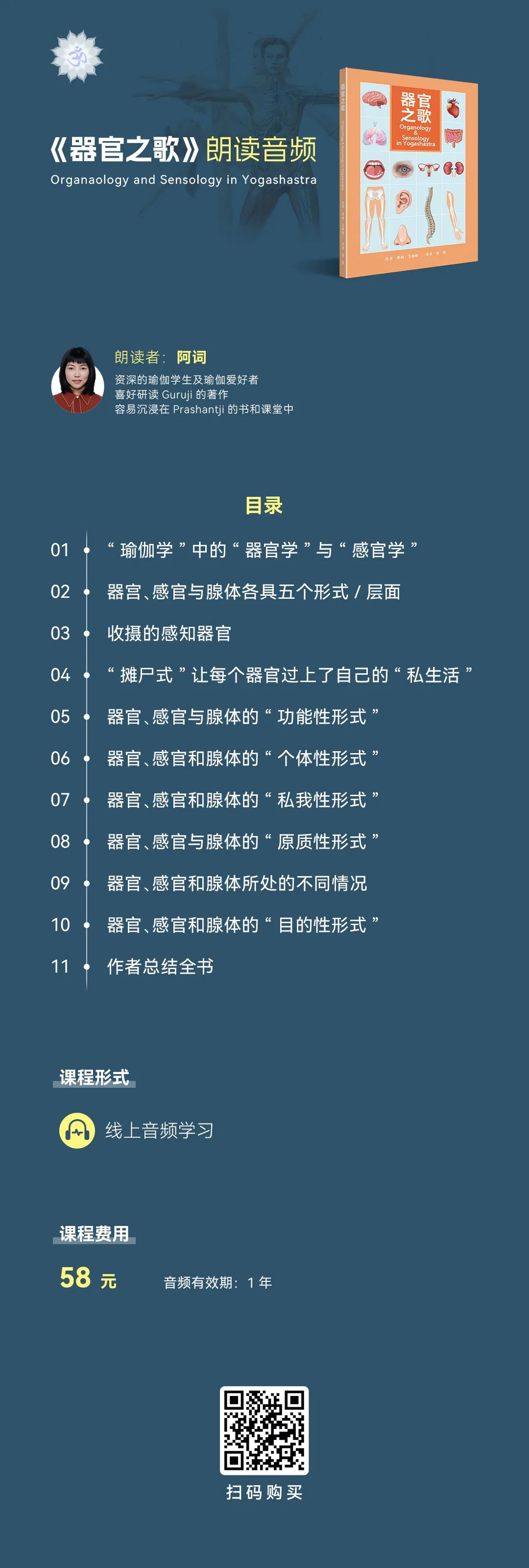

上圖為作者的官方學習平台, 如有微信帳號, 可在作者的學習平台直接購買.
本平台受原作者授權在海外建站, 歡迎與原作者確認 !!

未经授权, 不得转载。
 EN
EN  TW
TW